

Prenatal Yoga in Philadelphia: What to Know Before You Come to Class
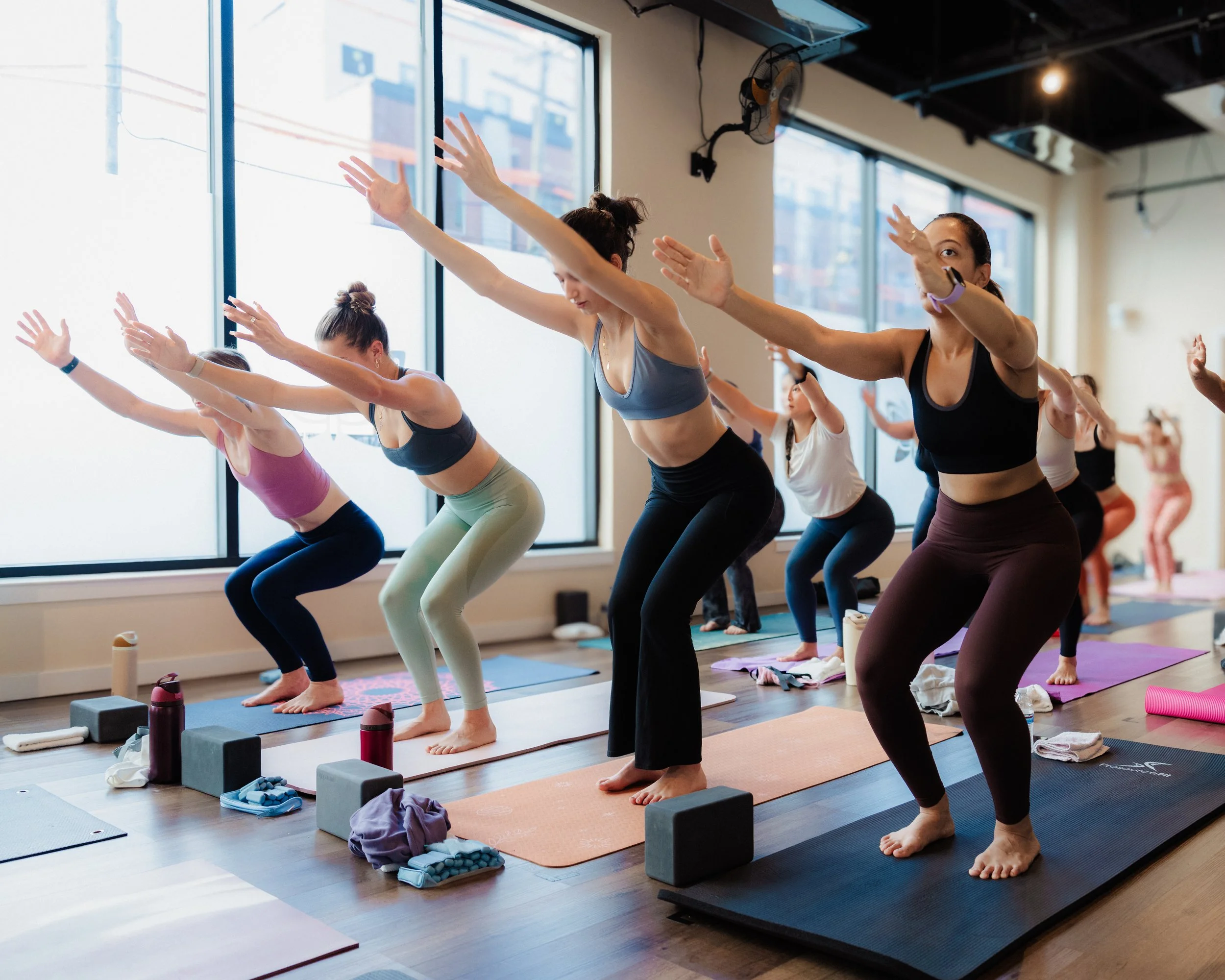
Is Yoga Safe During Pregnancy?
Yes, for most people. The American College of Obstetricians and Gynecologists supports moderate exercise throughout an uncomplicated pregnancy, yoga included. Check with your OB or midwife first, especially if you have any complications.
Non-heated yoga is gentle enough to practice in the first trimester when you're exhausted, in the second when your body is changing fast, and in the third when everything feels harder.
What Kind of Yoga Is Best During Pregnancy?
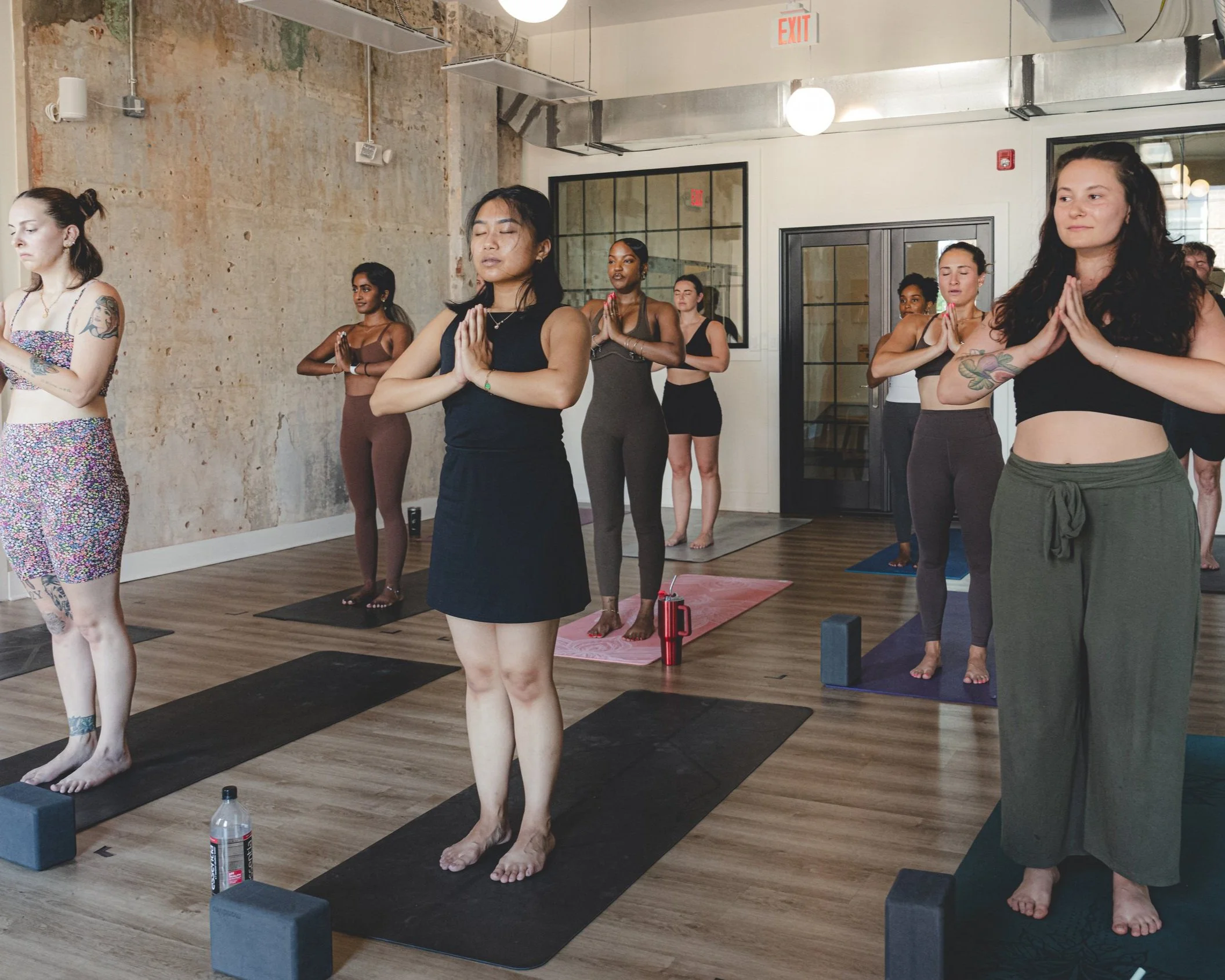
Slow flow and yin are what we recommend for expecting moms at Monarch.
Slow flow gives your body time to settle into each posture. It builds real strength in your lower back, hips, and pelvic floor without pushing your heart rate or core temperature. Yin is floor-based, longer holds, restorative. Both are non-heated.
Our teachers know how to modify for pregnancy. Let us know you're expecting and we'll make sure you're taken care of in class.
Is Hot Yoga Safe During Pregnancy?
I practiced hot yoga through most of my own pregnancy. I had years of experience in the heat before I was pregnant, my body was acclimated, and I checked in with my doctor throughout. That context matters.
Elevated core body temperature carries real risk, particularly in the first trimester. If you're pregnant and haven't been practicing hot yoga consistently, the heated room is not where to start. Talk to your provider and be honest about your experience level.
What Are the Benefits of Prenatal Yoga?
The things expecting moms notice most:
Lower back and hip relief. Up to 70 percent of pregnant women experience lower back pain. Slow flow addresses the underlying causes: weakened supporting muscles and a shifting center of gravity. Not just symptom management.
Better sleep. Breath-focused yoga activates the part of your nervous system that helps your body slow down and rest. Most of our prenatal students notice a difference in sleep within a few weeks.
Less anxiety. Prenatal anxiety is more common and more underdiagnosed than most people realize. A regular yoga practice lowers cortisol. It works, and it doesn't involve medication.
Labor preparation. The exhale is the most underused tool in labor. Learning to release fully on the out-breath, instead of bracing, is something we practice in every slow flow class. A lot of our students have told us afterward that it was the most useful thing they took into the delivery room.
Community. No study captures this one well, but it's real. Pregnancy can be isolating, especially later on. Practicing alongside other people is worth showing up for.
What Trimester Is Prenatal Yoga Safe For?
All three, with modifications.
First trimester (weeks 1 to 13). Safe, though fatigue and nausea may affect what you can do. Gentle breath work and grounding postures. Lying on your back is generally fine at this stage.
Second trimester (weeks 14 to 27). Often when expecting moms feel most engaged with practice. Your growing belly shifts your balance. Props become essential. We have everything you need at the studio.
Third trimester (weeks 28 to 40). The most physically demanding trimester, and the one where yoga often helps the most. Sequences focus on comfort, pelvic opening, and breathwork for labor. We favor side-lying over lying on your back to support circulation.
